
Vertical Grange des Peres (plus Bonus)

Many years ago I was working at a wine distributor as a driver and warehouse guy. It’s not a glorious position but gives you some flexibility, if you’re efficient enough, and gives you access to a warehouse of wine at a serious discount. When I left that job for a graphic design position at a software company, my good friend Solo took my place at the distributor and started his journey down the long, sordid road to wine-guydom. A year and a half later I returned to the distributor where I worked with Solo, and for years thereafter we were a wine-guy tag-team, both working various wine industry jobs, feasting, tasting, toasting, and discussing.

Three-Year Vertical of Grange des Peres, plus mystery BarberaSo from these years at varying distributors and in and about the wine scene, Solo and I had acquired fairly sizable wine cellars. Neither of us really knew what we were doing so we filled the shelves with what we were most excited about (and had ready, inexpensive access to). We liked lots of Rhone and Languedoc, Zinfandels, Syrahs, California Rhone-Style, and some Oregon wines, many from when Solo worked at a local winery. We didn’t really put down many of the classic cellar-able wines that one thinks of: Bordeaux, Burgundy, Barbaresco, German Rieslings, and so on.

Years later, when I closed my wine shop, thus losing my easy, cheap access to wine, I started diving into my cellar. (That is, after all, one of the reasons to have a wine cellar; the reserve supply for wines when the supply has dried up). I was now discovering, however, that many of these wines I loved in their youth, through time had lost most aspects that made me like them in the first place. Gone was the fruit, and the spicy and lively character had yielded to washed-out and rusty. None of the bottles I laid down were completely disastrous and, thankfully, there were very few corked wines. This did, however, open my eyes about the purposes of cellaring wines, what makes a wine age-worthy, and at what point it loses all practicality.

A couple of Fridays ago I had some friends over for an informal get-together where I was to make a cassoulet: the perfect French dish for a cold winter evening. There were six of us; all wine enthusiasts to some degree or other. For this meal, Solo and I were going to bring out some of the last holdouts in each of our remaining, and dwindling cellars. It was the Grange des Peres: a cult winery from the French Languedoc that has had a high-profile following since its inception in 1992 and has been given the two-thumbs-way-up rating from wine score tycoon Robert Parker. In fact, the guys from Grange des Peres are profiled and interviewed in the movie Mondo Vino, a film that raises questions of the power of critics and ratings in the shaping of the worldwide wine trade. But that’s another story altogether.

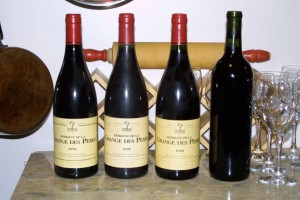
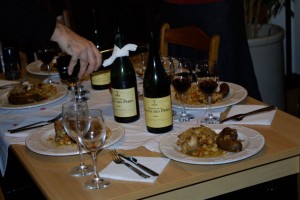
Four bottles on the table, and a whole bunch of glasses and food.Solo and I had picked up a few bottles of this stuff back in the day when we worked at the same distributor. We had been holding onto them for some special moment when we would both be around and we weren’t drinking something else. Suffice it to say that it took quite a while for that time to come around. I had a vertical of the Grange des Peres from the vintages 1996, 1998 and 1999, and Solo had a 1998. Solo offered his ’98 so I could save mine for a bit later. Our friend Paul, who was also in attendance at this gathering had brought a home-bottled Barbera from his own cellar as insurance against a possible 3-bottle cellar calamity. That didn’t happen. The calamity, that is. But we opened the Barbera anyway.

Now, whenever I open something that has been sitting in the cellar in the basement for a long time, I am always a bit surprised when it doesn’t turn out to be vinegar. All the wine expert books and magazines can make you fret for sleepless nights, concerned that you’re ruining your wine if the conditions aren’t just right. Has the temperature been consistent enough? Do I really need a humidity controller? It the stuff too close to the furnace? Have they all been torched from the 6 month stretch when the dryer hose detached and was blowing into the room? And other such realizations like: Oh crap! I just left all these bottles sitting upright for the last two years! But things never seem to turn out quite as disastrous as the wine pros would have you think.

On this fortuitous Friday, once we all got gathered and settled and started in on the white wine appetizers (white wine IS an appetizer, by the way), we lined up the bottles for the photo-op. A cassoulet has to stew for a couple hours, which gives a large window of opportunity for wine tasting, comparison, and discussion. So once I got the main cassoulet preparations in good working order we popped the four bottles and fished out enough glasses for each of us to have tastes of each wine.

These wines are predominantly Syrah and Cabernet Sauvignon (in what percentages I couldn’t readily find), both varietals that are known to age well when of noble stock and proper vinification and handling. The character of the Grange des Peres features a very concentrated fruit character, some stewed berries, and an aspect to them that I can only describe as “ketchup-y”; flavors I’ve gotten off of a number of Washington Syrah and Cabernet, and some Aussie stuff. Not having tasted these wines in their youth, I can’t accurately say exactly how they were fresh out of the barrel.

The 1996, being the oldest of the trio, had faded quite a bit, as one might expect. The fruit profile had gone a bit towards the flat, cardboardy side and remaining notes of toasted oak was taking over. The 1998 was showing much better, although Solo mentioned getting aromas of brettanomyces, a wine flaw that can add character or ruin a wine. I couldn’t taste the brett, but noticed higher concentarations of fruit that were slowly blossoming as the wine opened up. I thought the ’98 was the best shower of the three. The 1999 did perform just as well as a wine that was one year younger than the 1998. It was fine, had that aged quality to it, but losing a bit more structure than the ’98, and again fading to the secondary characteristics of barrel aging. We compared notes, argued, agreed and all lamented the fact that none of us had grabbed a 1997 to complete the proper vertical.

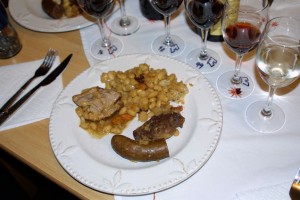
Cassoulet on a plate, surrounded by a halo of glasswareThe mystery wine that Paul brought was the pick of the bunch when it came to the food. I remember it was a Barbera, but it did not come with a label, so I don’t have the information of who made it or where it was from or what vintage it was. Barbera as a varietal is a spectacular food wine, especially those Northern Italian varieties. If I remember correctly, this one was from somewhere local, and if so, was one of the first American Barberas I have found that holds a torch to the Italians. I remember it stood up to the richer characteristics of the food, as well as soothing over the gamier characteristics of the wild duck that was in the cassoulet.

As with any wine I remove from the cellar, there is the slight feeling of remorse and niggling feelings of doubt about the timeliness of opening those bottles at the right or wrong time; too early or too late . . . or at all. There is some return of the feelings and memories of the time that was when the wines were laid down, like the dust on the bottles. But all this gives way to the proper purpose of wine when it mixes with the present jovial times of sharing these things with good company.

Posted in Miscellany | Leave a comment

A delicious shout-out to my favorite Thanksgiving wines!

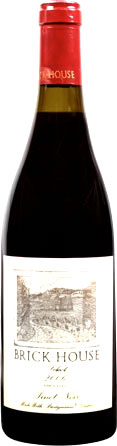
I know lately I’ve been the champion of budget wines. But that wasn’t always the way. When you work in the business you don’t really think about that $25 wine being a special occasion bottle. It more of a “Mmmmm . . . I’m in the mood for . . . that one!” kinda thing. It doesn’t mean that the under-$10 is what I prefer to drink. If I was in a higher income bracket, or if my ratio of income vs. expenses shifted significantly in the other direction, I’d love to be dropping a lot more on spectacular bottles each week. That’s not the case, but I still remember some of my favorites that are now the “special occasion” wines. This week we do have a special occasion.Brick House Gamay Noir . . . Okay, the bottle is actually Pinot Noir, but I didn't have the other to photograph. It looks mostly like this, but says "Gamay" instead of "Pinot", naturally. Of course at this quality you can't tell the difference so I really could have gone without saying anything. Whoops.

It’s that time of year when many people are thinking of what would make the perfect accompaniment to the Thanksgiving meal. Quite a few people have already decided on their favorites or dusted things off from the cellar. Other folks, for varying reasons, have opted for quantity, depending on their family situations and corresponding holiday arrangements. But then others might still need a nudge in the right direction. Choosing the wine that will go with your traditional turkey or ham can be a task, and there are plenty of resources out there that will dissect it all into a science or try to sell you something.

For this holiday, because it’s a feast, it purportedly about matching food with wine. It can be a daunting task, but it’s not really all that tricky. If you get something you already like, then it doesn’t really matter how well it goes with the food. If entertaining more than just yourself, get something everyone will like. If you and everybody you know want to drink Chardonnay all night, so be it. It’s not uncouth in the slightest, and frankly, white wines do pair well with poultry. However, there are many reasons and situations when it is better to choose the wine to compliment the food and not the guests. And there’s something to be said for adventurousness, too. There are a vast number of classic recommendations, but here are some of my favorites.

The Brick House Gamay Noir, hailing from our own home state of Oregon, is my premiere pick for the Thanksgiving table for the last 6 or 7 years years running. Gamay is the grape used in France’s Beaujolais, and is not very common anywhere else. There is only a smattering of it in Oregon and I love what they’re doing with it. The Oregon climate is apparently comparable to Beaujolais, if a bit warmer. The Brick House Gamay, in particular, is proof of what some attention and love can produce with this totally underrated grape. I heard rumor a few years back that one of the oldest Gamay vineyards in Oregon was going to be plowed under to plant more Chardonnay. I’m not sure which vineyard or who owned it, but to me that’s like razing down a Victorian castle to build a strip mall.

The Brick House Gamay is lush and juicy without being over the top, and features the subtle, delicate flavors appealing in Beaujolais. Many people love Pinot Noir for the turkey pairing, but I’ll take this over the other any day of the week. Especially this week. Unfortunately, it’s a limited bottling every year, and so it sells out quickly. I’ve found that this wine benefits from a year in the bottle, if you’re the patient sort that can wait around for a year. I can’t tell you if it does better after two years since I’ve never seen it hang around that long. As if this delicious wine wasn’t joy enough, any festive occasion with this label on the table will eventually erupt into raucus choruses of that Commodores song. You know the one. No. Not “Superfreak”, that’s Rick James. Don’t make me spell it out for you.

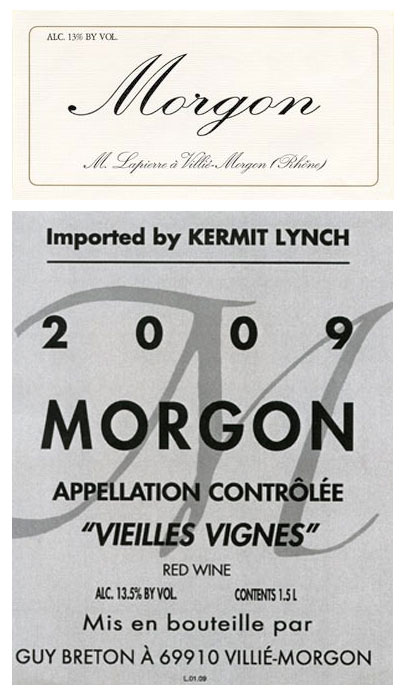
Two more of my favorites from years past hail from the Beaujolais region. There’s the Guy Breton Morgon and the Lapierre Morgon, both brought in by importer Kermit Lynch, whose wines are always a safe bet. Morgon is one of the cru appellations within Beaujolais and is my favorite. If you remember Guy Breton and Lapierre Morgon labels. Borrowed from the Kermit Lynch website. I hope they don't mind. Press is press, at any rate.from two paragraphs ago, the grape involved here is also Gamay, so you may be sensing a theme in my favorites, here. It’s been a few years since I’ve had either, but I remember them both as classic, European-styled (naturally) wines. The Guy Breton had more of a spiced, earthy tones while the Lapierre had lighter, fruitier tones with a more bracing acidity. But that’s coming from memory. If you have a hard time recalling the region’s name for when you go to the store to get it, remember: When there isn’t any more, then it’s gone. Get it? More-gone? Ah, never mind.

Those are my favorite picks, but if you’re still looking for advice, Pinot Noir can be a safe bet, although an expensive one. I also find a great food wine is Italy’s Barbera d’Asti and Barbera d’Alba, but tend to avoid the Sangiovese-based Chianti and the like. In the past I’ve had luck with Lambrusco, if you can get over the impressions left on the brand from the 70s. Then there’s the whites. I think most whites would work, but the full-bodied ones seem to work best. Chardonnay, Viognier, and Oregon Pinot Gris are top picks, but there are few places you could go wrong.

I wish you the best of luck, and a happy, or at the very least, tolerable, Thanksgiving Holiday!

Posted in Miscellany | Comments Off

Viva Portugal!

So let’s face it. We don’t really know jack about Portugal, do we? If you had a similar educational experience like me in the American public school system, we all learned about Portuguese explorer Christopher Columbus, right? Well, it seems his heritage may be disputed and by birth he’s actually Italian. So there goes that little bit of Portuguese history we thought we knew. Okay, but I still remember Vasco de Gama and Ferdinand Magellan. There. Dispute THAT elementary school world history teachers. Other than that, the only thing I’ve learned about Spain’s Iberian neighbor is a bit about their wines.
To say I know their wines isn’t saying much. Portugal, like much of Europe, have been under vine for centuries, thanks to ancient cultures. Yet unlike many others that share the continent with them, we just haven’t had much exposure to their wines. Why is that? I can only imagine it has to do with the decisions of marketing and exporting companies over the years. The better known European wine regions dominated the marketplace, perhaps just by name recognition alone. When any Portuguese wines did arrive on our shores it was often a result of Port houses packing in their regular wines to “tag along” for the ride in the cargo containers with their fortified bretheren.

Things have started to change for Portuguese wines. It reminds me of about 15 years ago when the South American wine boom seemed to really be taking hold of the value wine market. Flooded, rather. New wineries were popping up in Argentina and Chile like prairie dogs. (Insert Chile-dogs joke here). It was mass amounts of bulk-run juice from new vineyards, new producers, and old European producers playing the “flying winemaker” game.

Portugal is a different kind of deal because it has always been there and has always been doing their own thing. The major challenge is marketing these wines for new export. The price may be appealing, but it’s going to be uncharted territory for a good majority of wine shoppers. Most folks know what a Chianti or Bordeaux is, or could point out the regions on a map, or know what grapes make up many regional European wines. But who knows what region Dao is? Or Estremadura? What the heck is a Trajadura grape? Or Encruzado? It’s all new territory and it’s going to be learning more lessons.

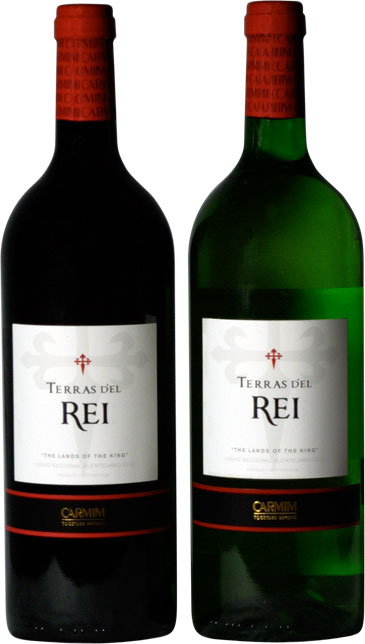
All that said, let’s get to the meat of the matter for the day. Here we have the Carim “Terras D’El Rei”, both red and white. We find them around here for $6.99. And they’re both full 1-Liter bottles, so that stretches the value out a little bit. They hail from the Alentejano region of Portugal. The producer and importer’s websites gave conflicting information from what the bottles themselves stated, and the online photos didn’t match the labels.So I’m going to be relying on the information that is actually on the bottle.
The white lists on the bottle the grapes Síria and Rabo-de-Ovelha. Ever heard of them? No? No big surprise there. They’re Portuguese varieties, only used in Portugal, chances are. The wine is dry and light with more herbaceous and spicy characteristics than fruit, so if you prefer a full-bodied white, like the Chardonnays and Viogniers, this probably won’t make you happy. But being light and dry it works great as a simple sipper while cooking dinner or hanging with friends. Or both.

The red lists on the bottle the grape varieties Trincadeira, Aragonez and Castelão. Never heard of those either? Nope? Well, Castelão and Trincadeira are Portuguese, like the previously mentioned white grapes, but the Aragonez is the Portuguese name for Tempranillo, the noble grape varietal of Spain. Yes, just to make thing even more confusing, right? It’s a medium-bodied red, with more spice than fruit, dry and not very showy, and feels oddly thin. I haven’t really enjoyed it as much as the white, but the flavors do seem to be growing on me and it seems to have some hidden complexity to it that still gives it some value.

I’ve tried a vast number of these less expensive Portuguese wines and if I could sum up the general feel of all of them I would list them as dry, subtle, gamey, at times harsh and dirty, and often with off-putting flavors. This makes them sound terrible. They aren’t terrible. They are definitely a different collective entity from their fellow European counterparts and might take a bit more understanding for the American palate to comprehend. It could be that’s the real reason why we haven’t seen much of the Portuguese wines here. Perhaps they’re just too different.

But, hey. For 7 bucks, maybe it’s a pretty cheap way to expand your horizons.

Posted in Cheap & Tasty | Comments Off

Don’t tell me what I’m tasting!

I made a comment in the last blog post that created quite a furor. Or, it could have if I had any readers. In regards to not describing all the characteristics of a specific wine, what I was saying is that as a wine “expert” or a wine “journalist”, it is not my duty to tell people what I’m tasting in wine. In actually, I believe this to be somewhat of a hindrance to any wine lover’s palate development. This is counter-intuitive to everything you may understand about the wine industry, and wine media, as a whole. Am I a jerk? Maybe. Wait . . . no. Read on.

What they really mean.We all know the wine magazines. And the wine blogs. And all these wine “experts”. And so on. They all want to tell you what you’ll be tasting in a particular wine. “Oh, you’ll be tasting essence of morning glory with hints of betel leaves, washes of kerosene, finishing with a load of horse dung.” Now, don’t get me wrong. I’m not deriding these wine professionals. I function on the same level as all these people. I have experience in wholesale and retail. I’ve trained with a large, international wine guild, and I’ve tasted thousands of wines. Tasting is important in assessing the wines out there for quality and consistency.

Now where this goes wrong is when reviews are used as a someone else’s road map. If wine is supposed to be an enjoyable personal exploration, then putting any credence into reviews is like taking a vacation without ever leaving behind the guidebook. Or touring art museums with those headphone things on as it shuttles you through the ropes describing what you’re already seeing. Or reading the spoilers for a movie before seeing it. You only end up trying to enjoy someone else’s experience.

Let’s take this scenario. I’m going to a winery and stepping up to the tasting bar. There is someone at the wine bar with a well-rehearsed spiel about all the wines there on the table. “Here’s our Pinot Noir. You’ll notice firm earthy tones with a heady blackberry—” and that’s where I just want to say “Stop!”. There are plenty of psychological studies that indicate that ideas can be implanted. You just told me I’ll be tasting blackberries. Now there’s nothing I can do to not be looking to be tasting blackberries, and so I’ll probably taste them in there, even if I wouldn’t have without the suggestion. My own assessment of the wine has been altered.

Now take, for example, the back labels of wines. There’s all that “Imported by . . .” and “Don’t drink while pregnant and driving heavy machinery into health problems . . .” stuff nobody pays attention to. The rest of the space is a repository for any winery’s marketing genius. This is the area where they try to sell you the wine. If you can read it, you’re probably already holding it, so they got you halfway there.

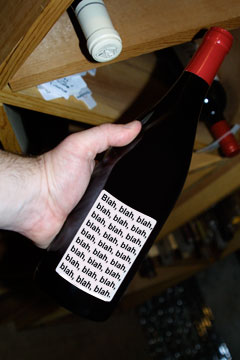
I don’t mind the “Our winery was founded, blah, blah, blah . . .” or the poetic ramblings that make it sound like this wine saved the immortal souls of mythical creatures. But when it starts rattling off flavors like it’s a shopping list for how to create your own wine with household ingredients, that gets irritating. Let me decide for myself what things I’ll be tasting. Besides, with all the things that can happen to a wine before, during and after a bottling, chances are the labels aren’t accurate unless the wine was tasted and label created a good few months after bottling.

Recently I read a wine blog where someone had written the opposite opinion of these back labels. Their theory was for those who wanted to know what to expect out of the bottle when you don’t know what you’re shopping for. I can grant you that for those who are wine novices, or buying for others, some description is helpful. But you can do that without ruining the experience. How about something like “Medium bodied” or “Drink with roasted meats and game” or “Best for an evening with chocolate and a lover” or “Only drink while already drunk”. None of these will give away what should be a pleasant, or unpleasant, surprise and leave to your own senses what should be a good exercise in assessing the wines for yourself.

But tasting and assessing shouldn’t be just a personal experience; It should be a social one! This is learning and sharing and should be fun. Get together with a group of friends or colleagues or professional wine tasting classes and groups. Taste that wine together and discuss what you’re experiencing. You may get blackberries, but I may get red currants. Your friend over there may not have ever eaten a red currant and so may get hibiscus flowers. And if you’re new to wine tasting, the only aroma and flavor you might get for a few years is simply “grape”. It could be that you will never taste those blackberries in that Pinot Noir at the tasting bar. But don’t let someone else tell you that you do.

Posted in Tips, Tricks & Sound Advice | 2 Comments

4 More Spectacular Finds

In the continuation of the “what to drink when you can’t afford what you really want” series, I thought I might bring up a few more example of some of my favorite wines that appeared on our dinner table and at our barbecues this summer.


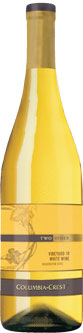
Columbia Crest Two Vines White, Washington State:
My friends and I have been drinking gallons of this stuff. So much, we’ve considered buying stock in the company. When this wine first appeared at the local Fred Meyer sore, I thought it was a good deal at $6.99. Later, when the New Seasons picked it up and offered it for $5.99 I thought it was a great deal. Then I was thrilled when it turned into a fantastically spectacular deal back at Fred Meyer at $4.99. Then I was surprised, and almost a little suspicious when it dropped to the ridiculously insane super stellar deal of $3.99 at Trader Joes. Then it sold out. Naturally. In fact I think we achieved that single-handedly. At this point in the article, here, you’d probably see some wine bloggers talk about all the characteristics of the wine: aromas, mouth-feel, balance, finish. I don’t really work that way. I’m not here to coddle readers; people can figure these things out for themselves. It’s more fun for everyone that way.


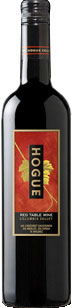
Hogue Red Table Wine, Columbia Valley, WA:
This is one of the other bottles I kept dropping in the 6-pack carrier with that Columbia Crest white. I wasn’t really paying attention to the vintages since the wineries making these larger-batch wines are pretty consistent. This wine wasn’t particularly flashy, but it wasn’t unpleasant. There are a lot of Portuguese reds at this same price, but a lot of those are like sipping grape juice off a dirty chalkboard through a stale cigar. Although this bottle may be opened and emptied with little fanfare and notice as to what was inside, I’d certainly notice if it sucked. It didn’t suck, and that makes it a winner. I keep getting more of this to see if I can finally pay attention and give it the full tasting report, but then I mostly end up thinking “Eh. Whatever. It goes with dinner. That’s good enough.”


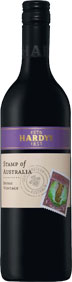
Hardys Stamp Shiraz, Australia:
Long known for budget wines, there really is a sea of Australian Shiraz. Here is another. Does it stand out any more than the others? Mmmm . . . Not really. But it tastes alright. It’s not really quite as food-friendly as the red wine listed above, but then it’s not ALL about the food, is it? Sure, it’s not going to win any awards, but then . . . well . . . aw, who are we kidding? We know they hand out wine awards to just about anyone, don’t they? We see bottles all the time with a gold or silver medal from some obscure festival or some other rinky-dink regional wine tasting event nobody has ever heard of. “This wine got 3 gold medals at the Tri-County Wine Tasting and Auto Parts Swap Meet in 2009!” Just like pee-wee soccer: everyone gets a trophy. So in that case, this probably will win some awards. Does it matter to me? Not in the slightest. But it’s under $6, and I’ve had far worse for $20.


Iron City Old German Premium Lager: This is a fantastic sparkling wine made with a fine blend of barley and hops in the Old German style of winemaking. It even has an Old German guy in lederhosen on the label! You’ll notice I didn’t pay attention to the vintage again because . . . Okay, I’m not fooling anyone. It’s beer. But at some times, for any wine lover on a budget, it comes a time that rather than stoop to the level of the bottom shelf for that jug of engine degreaser passed off as “Burgundy” or “Chablis”, it’s time to get the fizzy yellow stuff we had in college. As every winemaker will tell you, it takes a lot of beer to make good wine.

Posted in Cheap & Tasty | Comments Off

Adult Sized Juice-Box

Unemployed? Underemployed? Living as a poor, underprivileged artist, writer, or musician? I think a lot of us are in that same boat at this point.  This is when the creativity comes out in how to afford wine that falls out of the category of “Decent — ‘Hey, I still HAVE a job, albeit a poorly paid one’” into the “Well, this stuff isn’t bad . . . for the price” category. That’s just a step or two above the “Well, I’ve had it a couple times and I haven’t gone blind” and the “Don’t get it too close to the pilot light” categories. Telling these apart from each other can’t always be that easy, at face value.

Let me switch gears a bit here and talk a bit about bag-in-a-box wine. I’ve noticed a lot more above-average wineries releasing their juice in this way. We all know that box wine has been given a bad name by the 5-gallon swill served up in the ’70s and ’80s. Well, that stuff still exists. I can’t say I’ve honestly tried it in the last 15 years, so I can’t badmouth it in a legitimate manner. To be fair, I’ll do so at some point soon. But I digress.

Point being, the bag-in-a-box method makes a lot of sense, and doesn’t deserve the poor rap inherited from its ancestors. Take, for example, the common 3-Liter boxes many wineries are releasing now. That’s the equivalent of 4 bottles. Subtract the glass material for bottling the juice; that’s extra expense and added weight. Already the box is cheaper to package and lighter and therefore cheaper to ship.

Many restaurants like them because that’s three fewer packages to open for the same amount of wine, and three fewer packages to recycle after the shift is over. Not to mention it’s easier and more convenient to store. This counts just as well at home. The extra added bonus is that once you’re done with the wine, the bag can be inflated into a tiny pillow-for-one, which is great for camping. And “camping” is anywhere you happen to be if you finish the whole box by yourself. Try that with glass bottles!

The stigma of the bag-in-a-box can be shed once you try something that is worthwhile at a decent price. Once you say, “Hey . . . I actually wouldn’t mind finishing the rest of this box” and “Hey . . . this cost me a lot less than bottles would have” and “Hey . . . this fits in my fridge better” and “Hey . . . cool pillow!” then you’re on your way to acceptance. It’s just getting to that point.

So here’s one kind of box wine that has graced the shelves of our fridge a few times this summer. It’s Big House White made by the Big House Wine Company.

Big House White box. "Oh, sweet nectar . . ."Let’s say single-varietal wines are like solo musicians; you have a pretty good idea what to expect from their performance given the limited aspect of instrumentation. From that idea, then let’s say blends like this are like full bands with multiple members; it gets a lot more complicated and unpredictable. This band has 11 members. Now, not all bands can function with that many players, but say, a well-rehearsed ska band could make that many musicians work as a unit. With that in mind, this wine will probably appeal to a larger audience than your average ska band. I’m not trying to be totally disrespecting the ska bands. I’m just sayin’.

The bottom line is that it’s pretty darn good. The perk is that it’s pretty inexpensive. I found it recently for $16. Combine that with another 5 bottles at a place that offers a 10% half-case discount and that brings it down to $14.40. Make the calculations for the 4 bottles this 3-liter contains, and that’s $3.60 per “bottle”. Of course to get it that low, you have to buy the other five bottles, or find a friend to go in on the other bottles . . . or five equally thrifty friends to go in on the whole six. You get the picture. I think that lands it in the Cheap and Tasty category.

Posted in Cheap & Tasty | Comments Off

CV 3.0

Time to dust off the old wine blog. It’s been a long while of no writing and seeing as I have a bit more time on my hands, now it is a great time to entertain y’all. I know there’s nobody listening at this point, but we have to start somewhere.

Once upon a time I had passion. I had drive. I had integrity. I had vision.

Alright . . . I didn’t have any of those things. Well . . . maybe.

Really, I just had a wine shop. I kept that thing going for five years until I decided that retail endeavors in a recession was like swimming upstream with gravel in your pockets.

Now the point I’m getting at here, is that after working at a wine distributor for a few years, then as a retail wine shop owner for five more years, you don’t realize how dependent you get on that wholesale wine. I mean, you have access to every variety of wine at costs that can be half of what you pay in retail. On top of that, you get salespeople coming in constantly with samples of wine for you to try. Sometimes they leave behind bottles for you to try at your leisure, or sample for your customers. And even on top of that, you get invited to all the wine tasting events, for free, which is generally an orgy of free wine and tasty snacks. Ah, those were the days.

Now once you unplug yourself from the wholesale wine scene into a civilian life of full retail prices, after suckling at the teat of discounted and often free nectar-of-the-gods, the illusion comes crumbling down in the grand, sobering realization: Hey . . . this shit’s expensive!

The transformation is gradual, after couple months of losing that privilege. That sinking feeling sets in that the $20 bottle you enjoyed so much in the past was no longer in the budget’s forecast. Sure, that $6.50 bottle isn’t as tasty . . . But Hey! We can get three of ‘em for the same price!

That considered, I figured nobody needs a wine writer to rate and review the budget stuff. A friend recently pointed out that I was wrong on that point. Most folks are in the same boat. Sometimes we do need somebody to sort through the junk heap to find the tiny treasures.

My intentions for this space are now to fill it with words. Those words will have something to do with wine, at whatever cost. We still have many more things to discuss. Stay tuned.

Posted in Miscellany | Comments Off

Case Project: Conclusion

The original question was “Is a value still a value if you don’t want to drink it in the first place?”. And the original premise was to get a case of cheaper wine that doesn’t have anything to do with larger-name macro wine empires and see if it’s worth it. So what did we have? The lowdown:

Three Winds 2007 Syrah Vin de Pays d’Oc France, $8.95. Quality? Good. Value? Yes.

Caleo 2005 Primitivo Salento, Puglia, Italy, $9.95. Quality? Decent. Value? Kinda.

Altos las Hormigas 2007 Malbec, Menzoza, Argentina, $9.95. Quality? Decent. Value? Kinda.

Domaine Paul Autard 2006 Cotes du Rhone, France, $10.95. Quality? Very Good. Value? Yes.

Foppiano NV Lot 96 California, $9.95. Quality? Good. Value? Kinda.

Garnacha del Fuego 2007 Old Vines, Calatayud, Spain, $8.95. Quality? Very good. Value? Yes.

Henry’s Drive 2007 Pillar Box Red, South Australia, $10.95. Quality? Good. Value? Yes.

Daniel Belda Fonsalet NV Monastrell Jove, Valencia, Spain, $8.95. Quality? Fair. Value? Kinda.

Vallescoro 2006 Prieto Picudo & Tempranillo, Castille y Leon, Spain, $8.95. Quality? Good. Value? Yes.

Feudo Arancio 2006 Nero d’Avola, Sicily, Italy, $8.95. Quality? Very good. Value? Yes.

Garofoli Farnio 2007 Rosso Piceno, Marches, Italy, $10.95. Quality? Fair. Value? No.

Terra Andina 2007 Carmenere, Valle Central, Chile, $9.50. Quality? Very good. Value? Yes.

  • Case cost total: $116.95
  • After Case Discount: $105.26
  • Average cost per bottle: $8.77
  • Number of “Value? Yes.” bottles: 7
  • Number of “Value? No.” bottles: 1
  • Number of “Value? Kinda.” bottles: 4

I suppose you can draw your conclusions from the numbers here, as they are also just one person’s opinion. But if these numbers mean anything in the vast ocean of wine out there, it’s entirely possible to fill a cheap case with winners, or with duds. This was a mix of the two. But to answer the question of whether or not values really are values, I think the benefit of the experiment is in the question, not necessarily in the conclusion.

But to draw a bottom line, I think the jury is still out on this one, given the mixed results. More research needed. Hurrah!

Posted in Miscellany | Comments Off

Case Project: The Rest!

Well, let’s get this out of the way. I don’t think it’s going to be all that interesting to continue single-posting a whole case of wine. I’ve got more interesting things to write about. So let’s kick it into high gear and mass-review the next 9, and get to the juicy conclusion.

Wine #4: Feudo Arancio 2006 Nero d’Avola Sicilia IGT, Italyarancionero2

Sicily is always going to be a haven for decent values if you like old-world wines with a modern flair. No exception here. It’s rustic, yet refined. Spicy, fruity and even a touch jammy. It tastes like a warm island in the Mediterranean, served up with buttery mussels and capers while feeling the warm afternoon breeze. No really! It was just like that!

Worth it? Yes. Get it again? Yes.

Wine #5: Garofoli Farnio 2007 Rosso Piceno DOC, Italygarofolifarneorossopigeno

Keeping in Italy for the next one, here we have a wine from the Marches region, a less-traveled area for most Americans, wine-wise. I mean, you can’t visit a wine shop without tripping over a stack of Chianti of some sort, but when was the last time you had a wine from the Marches? That’s right, you never have! Okay, just kidding, but they are few and far between, and this probably only made it over the ocean because it hitched a ride with a Verdicchio Castello di Jesi, (its neighbor). So this is a Sangiovese and Montepulciano blend. It’s about the quality you might expect from a Chianti Ruffina. Dry, slightly stewed fruit, hints of dried smoldering herbs, but with tannin consistent with Central Italian reds. Needs food, though.

Worth it? Er, sure. Get it again? Er, maybe. There are probably a hundred things I’d pick up before getting this again, but it’s drinkable.

Wine #6: Caleo 2005 Primitivo Salento IGT, Italycaleoprimitivo

Yet another Italian wine, this one from the South in Puglia. If Italy has a Dirty South, Puglia is probably it, and you can really taste the terroir in any of the wines of the region. This is Primitivo, genetically the same as Zinfandel, but you could never mistake the two. It’s juicy in its own right, and has the prune-y flavors I get off of most of the Primitivo wines of the region. It’s a deep, dark, dried fruit, coarse tannin and some subtle spice.

Worth it? Yeah, I suppose so. Get it again? Yeah, maybe.

Wine #7: Garnacha de Fuego 2007 Old Vines, Calatayud, Spaingarnachadefuego1

A selection from Spain! I am a long-time fan of Grenache, a grape that makes something different everywhere it goes. In Spain, where it’s very warm, it makes this. Bold. Juicy. Got some blackberries. Some currants. A touch of clove and anise. Soft tannins. The flashy label? I don’t care for it so much. It seems a bit cheesy to me. And they say wine and cheese go together. Ha! For an easy-drinking red, this kinda rocks. Needs fuller-flavored foods, though. Pizza. Spaghetti and meatballs. That kinda thing.

Worth it? Totally. Get it again? You bet!

Wine #8: Bodegas Otero Valleoscuro 2006 Prieto Picudo & Tempranillo, Castilla y Leon, Spainvalleoscurotempranillo

What the heck is that? Prieto Picudo? Huh. Some Spanish grape, I suppose. Spain is still a great place to find values considering its developing status on the international wine horizon, at least with the lesser known regions and grapes. Like this one. What was it called again? Prieto Picudo. Huh. Well, it comes from the neighborhood of Ribera del Duero, although it’s a far cry from that powerhouse. Strawberries. Light spice. Medium-light tannins. A bit higher acid. It’s a somewhat lighter red that you could  probably just mistake for straight-up Tempranillo. It does contain Tempranillo but in a smaller proportion (15%) to the larger proportion of the other grape. What was that name again? Prieto Picudo. Huh.

Worth it? I suppose. Get it again? Yeah, sure. Why not?

Wine #9: Altos las Hormigas 2007 Malbec, Mendoza, Argentinahormigasmalbec

In Argentina, Malbec is king. No, wait. Not “king”. Generally there is only one king in a specific locale. What’s a good metaphor for something when there are lots of those things? Cockroaches? Yes! In Argentina, Malbec is a bunch of roaches! They’re everywhere! No, no. That’s not quite right either. How about “stars”? Good, good! And poetic, too. So in Argentina Malbecs are like the stars in the sky. There are a ton of them. Some are brighter or dimmer, larger or smaller . . . um, cheaper or, uh . . . more expensive. Sigh. The point I’m getting at is there are a lot of Malbecs in Argentina in a wide range of styles, from light and juicy, to heavy and tannic, to overblown, overoaked and overpriced. And some . . . just are. Like this one. So much so that this description was primarily a distraction.

Worth it? Well, yeah, I suppose. Get it again? Well, yeah, I suppose.

Wine #10: Terra Andina 2007 Carmenere, Valle Central, Chileterraandinacarmenere

Okay, now. We may be onto something here. The most often overhyped grape of Chile makes good. There is something about this that I find so pleasing. It’s like a certain crispness of character that I’ve grown so fond of in Cabernet Franc. Delicate, but with a punch. There’s fruit here. And this light, delicate flower on top. Wow. This I did not expect. Requires further research.

Worth it? Hell, yes. Get it again? Hell, yes.

Wine #11: Henry’s Drive 2007 Pillar Box Redpillarboxred

It’s a blend of Shiraz, Cab and Merlot. No surprise there. It’s Australian. Big. Fruity. Jammy. Unsubtle, but pleasant. There’s really not that much to tell. The reason why Aussie wines dominate the market is because they are good, easy-drinking, and overall pleasing wines at a great price. “Tails, you win” right? Not exactly THAT, per se. But true, nonetheless. Something I’ve learned about the Australian wine is that it’s a specific curve. Could be bell-curve. Could be parabolic. But price-to-quality certainly does plateau after about $25. That could spell trouble for their wine industry as a whole, but for the value seeker, it can save you some bucks. I’ll go as high as $50 for some oddball Mataro, just for nerdiness’ sake. But really, it’s pretty consistent. Heck, that’s probably another article altogether.

Worth it? Yep! Get it again? Yeah, if I’m in the mood.

Wine #12: Three Winds 2007 Syrahthreewindssyrah

This is another Australian w . . . huh, what? It’s French? But it’s—okay, okay . . . so it’s French. “South of France” it says. Specifically we know it’s Languedoc, but the website says they collect grapes from all over the region. So I imagine it’s really Vin de Pays, but not referred as such on the label. But really, it’s made in such a new-world style, it might as well be Australian. Bold jammy fruit. Screwtop. Flashy branded label. Actually, the fruit DOES exhibit a few more “French”-like qualities that differentiate it as a Syrah versus a Shiraz. Actual spice notes. A touch of black pepper. A fleck of clove. Awash in  jam. I know what they’re doing here. And it’s selling like gangbusters. Really, what the heck does that mean? “Gangbusters”? Ugh. Here’s the bottom line.

Worth it? Sure, whatever. Get it again? Only if you want to support the New-World influence on the old world regions, even if that means Languedoc. Oh, me personally? Nah.

Stay tuned for the juicy conclusion!

Posted in Miscellany | Comments Off

Case Project Wine #3: Foppiano Lot 96

foppianolot96One of my reasons to research these inexpensive wines in the face of economic adversity is my lifelong cynicism about the retail industry in general and the commercial view of “value”. For example, long ago when I was about 10, I remember leafing through a Sears catalog, looking for things to circle so my folks would know what to get me for Christmas. This was back when the Sears catalog was bigger than a phone book. (Also when phone books were smaller, and people actually used them.)

Of course, I didn’t want to miss anything so I looked through the whole catalog. Appliances. Power tools. Lingerie and swimwear. Heh. Big store, big catalog. It kept me occupied for a few hours. What I remember though is that since it was the Christmas shopping season, they had the quintessential shopping guide, and whatnot.

One specific section of this gift guide was clearly labeled “Gifts Under $30!!!” And every single thing in that section was $29.99. Now, even at the age of 10 I was saying “What are you kidding me?” Way to throw us a bone, Sears. I mean, really. That shows just how much they care. Or, what they really care about. A few more rip-offs later and my journey to the dark side of cynicism would be complete. Darth Mike.

Segue into today, or around today-ish, and it got me thinking about the wine industry, as well. Wait, first let’s get into Europe. Someone send me to Europe?

Okay, now we’re in Europe. Or in Franco-Italio wine country. Everyone who I’ve known or met who has traveled to Europe come back with the same old story. The wine was spectacular, but it wasn’t the stuff you buy on the shelf in the states in bottles. It was wine you would buy in 2-liter jugs, or refillable bottles, or a canteen to take to work, or it’s piped directly into peoples’ homes, with a tap for hot, cold, and wine, and it’s spectacular and way better than the stuff we get in The States, blahdeblah, etc.

Not so coincidentally, I notice that there is a wealth of wine from those areas arriving to our shores with affordable price tags, and it’s decent juice. The aforementioned people who went to Europe would often say that the cheap stuff that arrives here in bottles isn’t as good as the plastic-jug country wine over there, but there’s something to be said about scenery while drinking the stuff. Plus, on the other side of that argument, it probably doesn’t do a wine any good to be jostled about on a boat in the Atlantic for 6 weeks, sometimes in 100-degree shipping containers.

So what’s our problem? While shopping for the under $10 wines for the case project, I tried to find representatives from our American shores to even out the roster. Australia was easy. Chile, Argentina, no problem. Italy, piece o’ cake. But when it came to our home country, it was near to impossible to find something within the budget that is still independently made. Sure, you could drop $3 on ol’ Charlie Shaw, K-J, or anything else that’s made in million-gallon batches. Or in Washington you can find the budget blends that get branded and bought by merchandising giants, where the cost rises by a buck-a-year and the quality drops with a resounding “Plonk!” sound.

And in Oregon? Fuhgeddaboutit! A place where any retired attorney can buy a plot of land, squeeze out a few bottles and then charge $75 a pop by the second vintage. A place where a $17 Pinot Noir is as cheap as it gets. You won’t see any Oregon wines in this project.

So here we are with the sole American wine I could find for the project: The Foppiano Lot 96.

I’ll start out by saying that I’ve always liked the Foppiano wines. They’re one of the few and premiere producers of Petite Sirah, and that will always be a positive note in my book. I gather that the wine is named “Lot 96” after the founding date of the winery (1896) rather than how many tanks there are in the winery, or a rotating number for each release, or whatever.

The first thing I noticed about the wine is the glaring absence of a vintage date. Now, don’t get me wrong. There are probably a lot of decent wines that aren’t from a specific vintage. But my knee-jerk response to this is usually along the lines of “there’s something about the wine that makes it so the winery can’t declare a vintage on there”. I mean, I think wineries can automatically charge more for a bottle if it’s a vintage wine.

So why couldn’t they declare it a vintage wine? The most obvious reason is blending wines from different vintages. I believe there are other conditions, like inter-state grape trading, or perhaps how the wines are made. The cynic in me just automatically believes that someone is trying to get away with something, but softened by the idea that maybe, just maybe, someone wants to put out something inexpensive. For the people!

After checking the Foppiano website and spec-sheet for the Lot 96, and after wading through a bunch of schlock that reads like corporate-monkey mission statements, I saw the general makeup of the wine is a kitchen sink blend of Sangiovese, Petite Sirah, Zinfandel, Carignane,  Merlot, Cabernet Sauvignon, and Cabernet Franc. Whew. Did we miss anything? Any room for some Lemberger, or something?

The end result? Good! It was about as dark as what I would expect from a Petite Sirah producer, and a nice purpley-ruby color. The nose was somewhat sweet and spicy, with brambly and blackberry notes. The palate was like a blackberry jam, hinting at some basil and vanilla-like notes, but not the hit-you-over-the-head-with-oak-staves kinda thing. Reminiscent of some Australian wines of a similar caliber, if tasted blind I’d have said it was some Barossa plonk. So it passed the test, and at $9.95, it fits the bill. Even for a cynic.

Posted in Miscellany | Comments Off